

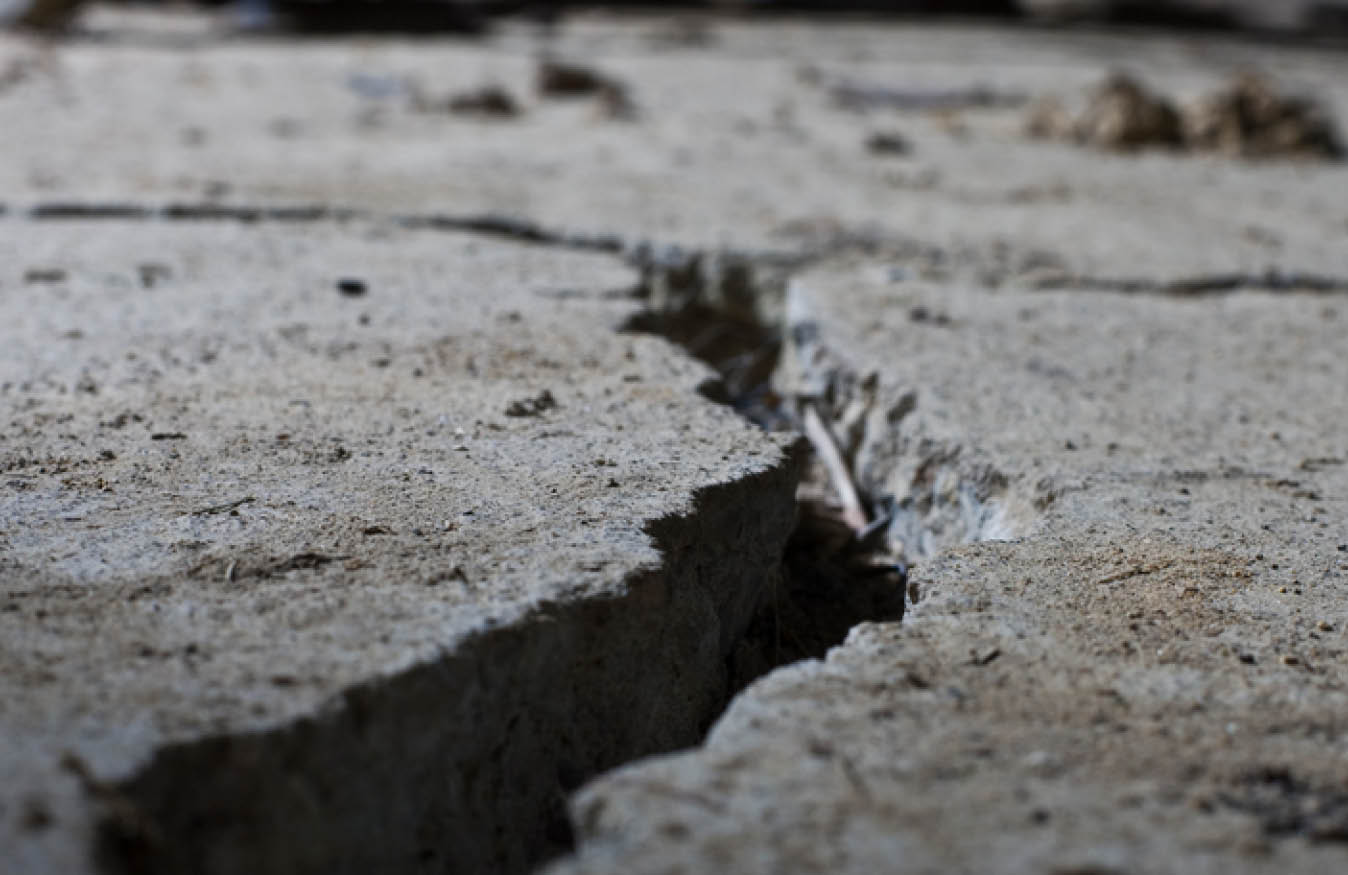
Unaddressed corrosion inside reinforced concrete changes how a structure behaves long before visible damage appears. Steel reinforcement gradually loses cross-section as rust forms along its surface. That loss reduces tensile capacity and weakens the bond between steel and concrete. Loads that were once distributed evenly begin to concentrate in fewer areas. Stress paths shift silently, leaving the structure less tolerant of movement, vibration, and added weight.
As corrosion progresses, internal pressure builds. Rust expansion forces the surrounding concrete outward, creating microcracks that spread along the reinforcement. Those cracks open new pathways for moisture and oxygen in which the corrosion cycle intensifies. Structural elements begin to respond unevenly as their ability to resist loads declines across slabs, beams, and columns. Deflection may increase under normal service loads. Doors and windows may begin to bind, while floor surfaces may lose alignment.
Visible signs of damage, such as spalling and rust staining, indicate that internal corrosion has progressed inside. By the time concrete flakes away, bond strength has already declined. Once reinforcement becomes exposed, corrosion advances faster, further reducing steel capacity. Repairs at this stage must address both concrete damage and compromised reinforcement, increasing cost and complexity.
Delamination introduces another serious risk. Concrete layers separate internally, reducing effective thickness and load capacity. These hidden voids respond poorly to dynamic forces such as foot traffic, equipment movement, or seismic activity. A slab that appears intact can fail suddenly under conditions it once handled safely. Safety margins narrow quietly, often without visible warning.
Corrosion also affects durability beyond structural strength. Cracks allow moisture to migrate into occupied spaces, often leading to leaks, efflorescence, and mold growth. Mechanical systems and finishes sustain secondary damage, and operational disruptions become increasingly frequent. Deferred action shifts maintenance from planned work to urgent intervention.
Evaluation by a structural engineer NJ identifies corrosion activity before visible symptoms dominate. Advanced testing methods reveal moisture paths, steel condition, and bond loss. These findings support targeted repairs rather than surface patching that fails to address underlying damage. Without this level of assessment, repairs risk becoming temporary fixes that do not slow deterioration.
A building inspection engineer NJ documents condition trends and tracks progression over time. This report supports informed decisions about repair timing and scope. Ignoring internal corrosion does not preserve a structure. It allows damage to compound silently until options narrow and risks rise. Reinforced concrete depends on hidden steel, and when that steel deteriorates without intervention, the consequences extend far beyond the surface.
To learn more about how internal rebar corrosion develops and why early detection matters, check out this infographic by Landau Consulting.
<a href=”rebar-failures-101-how-concrete-fails-from-inside-out/”><img src=”https://dl.dropboxusercontent.com/scl/fi/llqs8yinfldcqr33ybvlc/rebar-failures-101-how-concrete-fails-from-inside-out-infographic-image.png?rlkey=l0ruznyt7jxi07dz86rt0zr2x&dl=0″ alt=”” /></a>


